
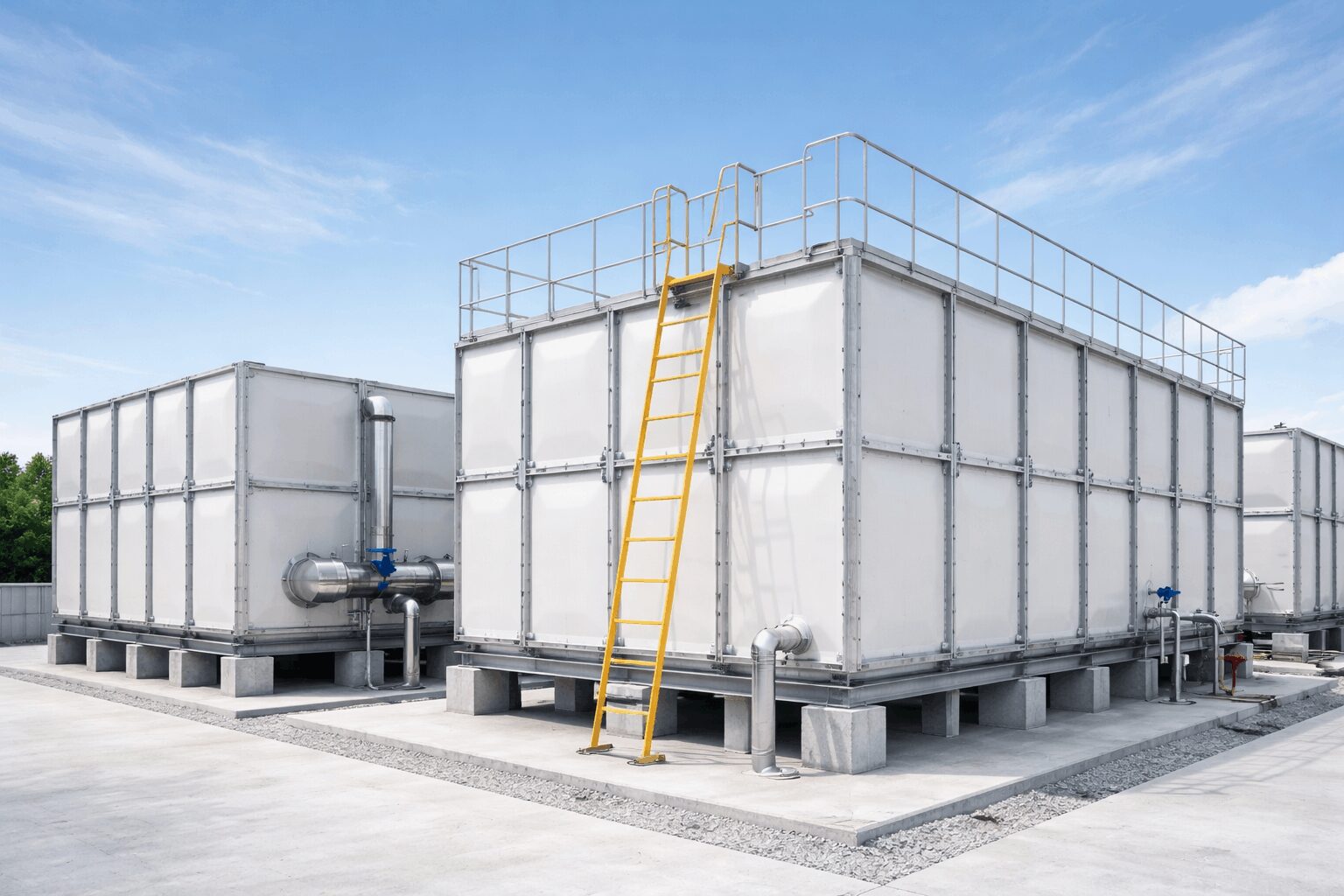
The United Arab Emirates climate is extremely challenging for water storage systems. With temperatures reaching 45–50°C, high UV exposure, and harsh desert conditions, selecting the right water tank material is critical for long-term durability, water quality, and maintenance costs.
Among the most common water storage solutions used in the UAE are GRP Water Tanks, HDPE Water Tanks, and Steel Water Tanks. Each type has its own advantages and limitations depending on the application such as residential buildings, villas, commercial towers, and industrial projects.
In this article, we compare GRP vs HDPE vs Steel Water Tanks to help contractors, consultants, and property owners choose the best option for UAE conditions.
1. GRP Water Tanks (Glass Reinforced Plastic)
GRP water tanks are widely used across the UAE, especially in Dubai, Abu Dhabi, Sharjah, and other Emirates, due to their durability and modular construction.
Advantages of GRP Tanks
1. High Temperature Resistance
GRP tanks perform extremely well in UAE’s hot climate, maintaining structural integrity even under intense heat and sun exposure.
2. Corrosion Resistant
Unlike steel tanks, GRP does not rust, making it ideal for long-term water storage.
3. Modular Panel Design
GRP tanks are manufactured in sectional panels, allowing easy installation on rooftops, basements, or restricted spaces.
4. Long Lifespan
A properly installed GRP sectional tank can last 25–30 years with minimal maintenance.
5. Suitable for Large Capacity
GRP tanks are ideal for large buildings, hotels, hospitals, malls, and industrial projects.
6. Insulated Options Available
Insulated GRP tanks help maintain water temperature in extreme UAE heat.
Disadvantages of GRP Tanks
-
Higher initial cost compared to HDPE tanks
-
Requires professional installation
2. HDPE Water Tanks (High-Density Polyethylene)
HDPE tanks are commonly used in residential villas and small buildings due to their affordability and simple installation.
Advantages of HDPE Tanks
1. Low Cost
HDPE tanks are usually cheaper compared to GRP or steel tanks.
2. Lightweight
They are easy to transport and install.
3. Chemical Resistant
HDPE material is resistant to many chemicals and does not corrode.
4. Suitable for Small Capacity
Best for home water storage tanks.
Disadvantages of HDPE Tanks
1. UV Degradation
Continuous exposure to UAE sunlight can weaken HDPE tanks over time.
2. Limited Capacity
HDPE tanks are usually limited in size and not suitable for large buildings.
3. Shorter Lifespan
Average lifespan is 8–12 years in harsh climates.
4. Structural Weakness
Large HDPE tanks may deform under high temperatures.
3. Steel Water Tanks
Steel tanks have been used for many years for industrial water storage and fire water storage systems.
Advantages of Steel Tanks
1. Strong Structure
Steel tanks can handle high-pressure water storage.
2. Large Capacity Storage
They can store large volumes of water for industrial projects.
3. Suitable for Fire Water Tanks
Steel tanks are often used for fire fighting water storage systems.
Disadvantages of Steel Tanks
1. Corrosion and Rust
Steel tanks can rust over time, especially if protective coatings fail.
2. High Maintenance
Regular inspection and repainting are required.
3. Heat Absorption
Steel absorbs heat, which may increase water temperature in UAE summers.
4. Shorter Lifespan Compared to GRP
GRP vs HDPE vs Steel Tanks – Quick Comparison
| Feature | GRP Tanks | HDPE Tanks | Steel Tanks |
|---|---|---|---|
| Lifespan | 25–30 Years | 8–12 Years | 15–20 Years |
| Corrosion Resistance | Excellent | Excellent | Poor |
| Capacity | Very Large | Small to Medium | Large |
| Heat Resistance | Excellent | Moderate | Moderate |
| Maintenance | Low | Low | High |
| Installation | Professional | Easy | Professional |
Which Water Tank is Best for UAE Climate?
Considering extreme temperatures, UV exposure, and long-term durability, GRP Water Tanks are generally the best option for UAE conditions.
They are widely used in:
-
Commercial buildings
-
High-rise towers
-
Hotels and hospitals
-
Industrial facilities
-
Labour accommodations
GRP tanks offer excellent durability, corrosion resistance, and large capacity storage, making them ideal for modern construction projects across the UAE.
HDPE tanks are better suited for small residential applications, while steel tanks are mostly used for specialized industrial or fire water storage systems.
Conclusion
Choosing the right water storage system is essential for maintaining water quality, safety, and long-term cost efficiency. While HDPE and steel tanks have their uses, GRP sectional water tanks remain the most reliable solution for the UAE’s harsh climate.
Their long lifespan, modular design, corrosion resistance, and high capacity make them the preferred choice for contractors and developers across the UAE.
Frequently Asked Questions (FAQ)
1. What is the lifespan of a GRP water tank in the UAE?
GRP water tanks typically last 25–30 years with proper installation and maintenance.
2. Are GRP tanks better than HDPE tanks?
Yes, GRP tanks are generally better for large buildings and commercial projects, while HDPE tanks are suitable for small homes.
3. Do steel water tanks rust in the UAE?
Yes, steel tanks may corrode over time due to moisture and environmental exposure.
4. Are GRP tanks approved in the UAE?
Yes, many GRP tanks meet Dubai Municipality and Abu Dhabi regulations for water storage.
5. Which tank is best for large buildings in the UAE?
GRP sectional tanks are the most commonly used water storage solution for high-rise buildings.
No comment